
Keto, Paleo, or Plant-Based? A Coach’s Guide to Finding Your Perfect Nutrition Pace
As a coach who works with individuals on body recomposition, better health, and sustainable fat loss, I hear the same question almost every week: “What is the best diet for fat loss and long-term health?”
The fitness industry loves to trend-hop. One year carbohydrates are the enemy; the next year, you aren’t allowed to eat breakfast. But true nutrition expertise isn’t built on dogmatic rules or extreme elimination. It is built on finding a sustainable nutrition framework that heals your relationship with food, protects your muscle mass, and keeps your body thriving.
Let’s pull back the curtain on the most popular eating patterns out there right now, analyzing the science, the pros and cons, and what they actually mean for your metabolism.
1. Plant-Based Diets: The Longevity Focused Framework
A plant-based diet focuses primarily on foods derived from plants, though it can encompass varying levels of animal products depending on your style. Research consistently links a plant-based diet’s benefits to lower body weight, improved cholesterol profiles, reduced blood pressure, and a lower risk of heart disease.
Understanding the Variations:
Vegan Diet: 100% plant-exclusive. It completely excludes all animal products, including meat, dairy, eggs, and honey.
Vegetarian Diet: Plant-forward, but allows for the inclusion of eggs (ovo-vegetarian), dairy (lacto-vegetarian), or both.
Pescatarian Diet: A plant-based foundation that integrates fish and seafood.
Flexitarian Diet: A highly flexible, plant-most approach that includes occasional high-quality animal foods.
My Verdict:
Shifting toward whole, plant-derived foods is incredible for cellular health and cardiovascular longevity. However, the more restrictive your boundaries become, the more strategic you must be. To protect your lean muscle tissue and prevent systemic fatigue, you must intentionally track your protein metrics and ensure adequate intake of vitamin B12, bioavailable iron, omega-3 fatty acids, and calcium.
2. Low-Carbohydrate Eating Patterns: Keto vs. Atkins
Low-carbohydrate protocols rely on minimizing glucose intake to force the body to utilize alternative fuel sources. While both prioritize fat and protein, their structural phases differ significantly.
The Ketogenic Diet
The ketogenic diet severely restricts carbohydrates (typically under 50 grams per day) to shift the metabolism into a state called ketosis. When glycogen stores run low, your liver converts fatty acids into ketones, turning fat into your primary daily fuel source.
The Pros: Rapid short-term weight loss and highly effective appetite suppression due to stabilized blood sugar levels.
The Cons: The initial metabolic shift can cause the “keto flu” (fatigue, dehydration, and digestive issues). Long-term clinical safety data is limited. Furthermore, because carbohydrates hold water in the muscles, reintroducing them later often reverses the immediate weight loss on the scale.
The Atkins Diet
The Atkins diet is a low-carbohydrate model that progresses through distinct phases. It starts with strict restriction to prompt initial fat loss, then gradually increases your carbohydrate allowance over time while emphasizing stable protein and healthy fat targets.
The Pros: It offers a more structured phase-out approach than keto and can improve key metabolic health markers.
The Cons: The early, highly restrictive phases frequently suffer from low fiber intake, leading to digestive discomfort. Because individual sustainability varies wildly, moving through the phases can be psychologically challenging to maintain long-term.
3. Extreme Elimination: The Carnivore Diet
Positioned as the mathematical opposite of veganism, the carnivore diet includes only animal-derived products (meat, fish, eggs, and specific animal fats) while entirely outlawing plant foods.
The Pros: Enthusiasts frequently report rapid short-term weight loss and an immediate reduction in bloating or digestive distress. This relief typically occurs because the diet acts as a massive elimination protocol, cutting out ultra-processed sugars and fermentable carbohydrates.
The Cons: From a clinical standpoint, this approach carries substantial risks. Health professionals frequently raise concerns over severe micronutrient deficiencies, elevated LDL cholesterol markers, kidney strain from excessive protein processing, and a total absence of dietary fiber. Robust, long-term safety research on a purely carnivore lifestyle does not exist.
4. Ancestral Eating: The Paleo Diet
The Paleo diet is modeled after the presumed eating habits of early humans during the Paleolithic era. It embraces whole meats, wild-caught fish, fruits, vegetables, nuts, and seeds, while strictly excluding modern agriculture products like grains, legumes, dairy, and processed foods.
The Pros: By eliminating refined white sugars, processed dairy, and factory-made snacks, you naturally reduce your daily calorie intake without needing to obsessively weigh every single meal.
The Cons: For physically active individuals or those participating in regular strength training, eliminating grains and legumes makes it incredibly difficult to meet the daily carbohydrate demands required for optimal athletic recovery.
5. Medically Guided Protocols: Gluten-Free and Low-FODMAP
While these two frameworks are frequently co-opted as casual weight-loss strategies, they are actually targeted therapeutic tools designed specifically to treat gut pathologies.
The Gluten-Free Diet
A gluten-free diet requires the complete elimination of the protein gluten, found natively in wheat, barley, and rye. This protocol is an absolute medical necessity for anyone diagnosed with celiac disease and offers significant relief for individuals with non-celiac gluten sensitivity.
The SEO Reality Check: For individuals without a medical sensitivity, buying packaged “gluten-free” products rarely yields health benefits. Many of these processed items are heavily refined, containing lower fiber and higher sugars than their gluten-containing counterparts. A healthy gluten-free strategy should focus strictly on whole, naturally gluten-free foods like quinoa, sweet potatoes, and wild rice.
The Low-FODMAP Diet
FODMAP is an acronym for Fermentable Oligosaccharides, Disaccharides, Monosaccharides, and Polyols. These represent a specific collection of short-chain carbohydrates and sugar alcohols that can be poorly absorbed by the small intestine, leading to fermentation and gas.
The Pros: The low-FODMAP diet is a highly effective, clinical short-term protocol designed to manage symptoms of Irritable Bowel Syndrome (IBS), SIBO, IMO, and other conditions of severe, chronic bloating.
The Cons: This is not a permanent lifestyle diet. Because it restricts a vast array of nutrient-dense vegetables and fruits, staying on it indefinitely can deplete your gut microbiome diversity. It is designed to be a temporary elimination process, followed by a systematic reintroduction phase to isolate specific trigger foods.
6. Nutrient Timing: Intermittent Fasting
Intermittent fasting shifts the analytical focus away from what you are eating and places it entirely on when you are eating. Common methods include the 16/8 method (fasting for 16 hours and consuming all daily calories within an 8-hour window) or the 5:2 method (eating normally for five days and significantly reducing calorie intake on two non-consecutive days).
The Mechanism: Fasting works by mechanically shortening your daily eating window, which naturally assists many individuals in maintaining a caloric deficit.
The Limitation: While it supports fat loss for some, it is not a magical metabolic cure. For individuals managing high stress levels or navigating complex hormonal transitions, prolonged fasting windows can inadvertently spike cortisol (stress hormones), disrupt sleep patterns, and lead to compensatory overeating in the evening.
7. Performance Optimization: Carb Cycling
Carb cycling involves alternating between high-carbohydrate days and low-carbohydrate days, strategically matching your macronutrient intake to your physical activity levels. For example, an individual might consume higher carbohydrates on intense training days to fuel muscular performance, and drop to low carbohydrates on rest days to optimize fat oxidation.
The Pros: It is a highly effective tool for athletes and fitness professionals looking to optimize body composition and maximize workout output.
The Cons: Clinical research on the general population remains sparse. If your meals aren’t meticulously planned ahead of time, the low-carbohydrate days can trigger profound physical fatigue, while the high-carbohydrate days can lead to accidental overeating.
8. The Gold Standard: Anti-Inflammatory Eating Patterns
If your goals are centered around lowering cellular stress, recovering efficiently from your workouts, and promoting long-term longevity, anti-inflammatory eating is the gold standard. Rather than focusing on restriction, this approach focuses on flooding the body with nutrient-dense, whole foods: vibrant fruits, vegetables, whole grains, nuts, seeds, and omega-3 rich fatty fish.
How it Works: These whole foods provide rich sources of antioxidants and essential fatty acids that actively balance the body’s immune system and soothe chronic inflammation. Conversely, ultra-processed foods, refined white sugars, and trans fats act like fuel for internal inflammation.
The Real-World Example: The most thoroughly researched, globally celebrated example of an anti-inflammatory framework is the Mediterranean Diet. It transitions seamlessly into a permanent lifestyle because it emphasizes real, vibrant, satisfying food rather than deprivation.
Conclusion: Finding Your Sustainable Nutrition Framework
There is no medical award for choosing the most restrictive or difficult diet plan. The best diet for fat loss and long-term health is the one that gives you consistent daily energy, allows you to hit your essential protein targets, and fits seamlessly into your life for years—not just weeks.
To cut through the noise of the fitness industry, I highly encourage following a balanced, anti-inflammatory protocol built on whole, unprocessed natural foods. Rather than stripping nutrients out, building your lifestyle around these optimized, science-backed macronutrient and micronutrient target ranges will protect your lean muscle mass, support metabolic health, and keep you thriving.
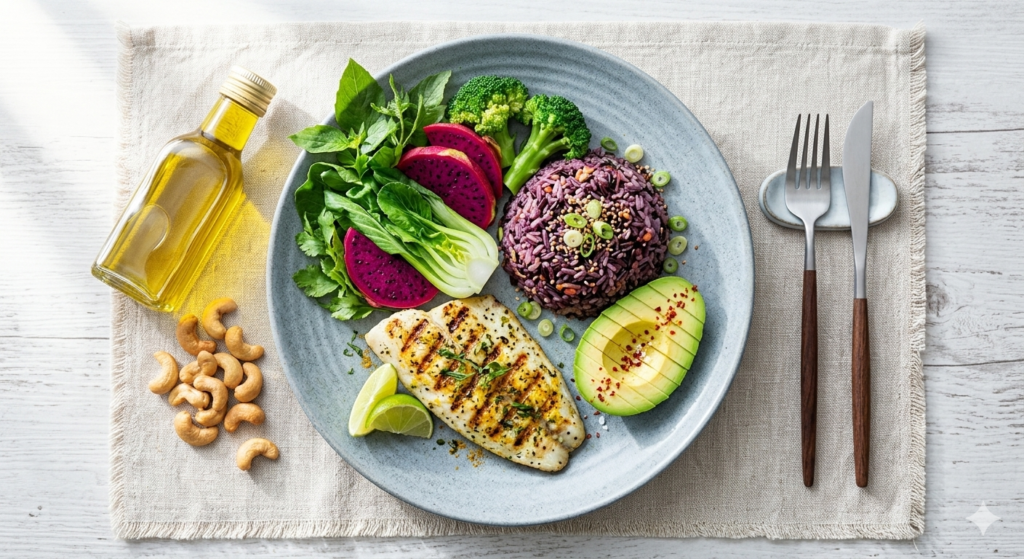
Living here in Cambodia, we are incredibly lucky to have immediate access to amazing, fresh, natural products right at our doorstep. From local morning markets to organic farms, sourcing nutrient-dense ingredients to build this exact plate is both easy and vibrant:
High-Quality Protein (25% – 35% of daily calories): Crucial for muscle maintenance, tissue repair, and high satiety.
Examples: Freshly caught Mekong fish, local poultry, eggs, lean meats, and high-quality plant-based options like tofu and tempeh.
Good Quality, Complex Carbohydrates (35% – 45% of daily calories): High-quality, low-glycemic carbs fuel your workouts, sustain brain energy, and prevent performance crashes.
Examples: Local sweet potatoes, Cambodian wild rice, brown rice, quinoa, and oats.
Good Unsaturated Fats (20% – 30% of daily calories): Essential for hormone production, joint health, and lowering systemic inflammation.
Examples: Cold-pressed cooking oils, fresh avocados, local cashews, walnuts, chia seeds, and the natural fats found in omega-3 rich fish.
Dietary Fiber (Targeting 25 – 35+ grams per day): The bedrock of gut health, smooth digestion, and blood sugar regulation.
Examples: Local beans, lentils, tropical fruits like dragonfruit and papaya, broccoli, leafy greens, and chia seeds.
If you are ready to stop chasing quick-fix trends and build a sustainable nutrition plan that supports a strong, thriving body, let’s focus on adding high-quality nutrition in, rather than constantly stripping it out.
Ready to cut through the diet confusion and find a nutrition pace that actually works for your body? Contact me to schedule a free 15-minute consultation, and let’s map out your personalized, anti-inflammatory lifestyle plan today!